
[Location Technology, IRL] From Military Secret to Daily Essential: The Story of GPS
Tech basics
The GPS (Global Positioning System) we use every day wasn’t always meant for us.
It began as a tightly guarded U.S. military technology, built to guide missiles and track nuclear submarines and aircraft. So how did something designed for war end up guiding morning commutes, food deliveries, and late-night walks home?
The turning point came from one tragic moment in history.
1. 1983: A Lost Flight Changes Everything
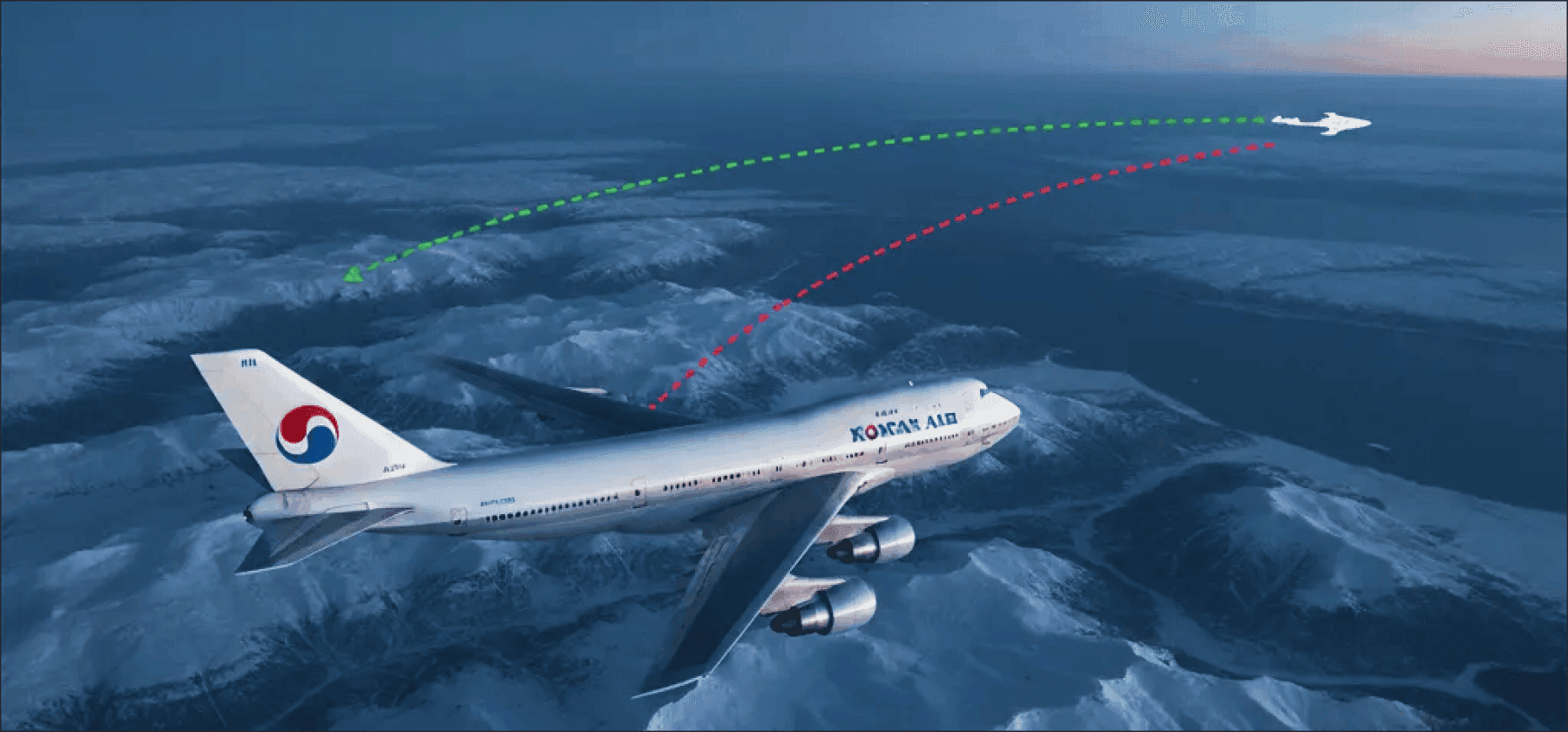
Before 1983, GPS was completely off-limits to civilians. Commercial aircraft relied on ground-based radio signals and inertial navigation systems. These systems worked, but they weren’t perfect. Over long distances, small mechanical and environmental errors quietly added up.
In September 1983, Korean Air Lines Flight 007 departed from New York to Seoul. Somewhere along the way, it drifted off course. Unaware of the deviation, the aircraft entered Soviet airspace, triggering a tragic chain of events.
The disaster exposed a terrifying reality: even modern aircraft didn’t always know exactly where they were.
2. When GPS Became a Public Promise
In the aftermath, U.S. President Ronald Reagan made a historic announcement. GPS, once reserved exclusively for the military, would be made available to civilian aircraft worldwide.
This wasn’t just a policy change. It was a philosophical shift. A technology created for warfare was reframed as a global safety system.
It’s also why GPS, unlike many modern digital services, doesn’t come with a monthly fee. From the start, it was positioned as shared infrastructure rather than a product.
3. From “Somewhere Nearby” to “Right Here”
Early civilian GPS wasn’t very precise by today’s standards. For security reasons, its accuracy was intentionally degraded, with errors of up to 100 meters. Good enough for general positioning, but nowhere near precise enough for real navigation.
That changed in 2000.
The U.S. government turned off “Selective Availability,” instantly improving accuracy to around 10 meters. Overnight, GPS shifted from a niche aviation aid to a foundational technology.
Smartphones, car navigation, ride-hailing, and delivery apps all followed. Not because GPS changed again, but because everything else finally caught up to it.
4. How the Sky Tells Us Where We Are
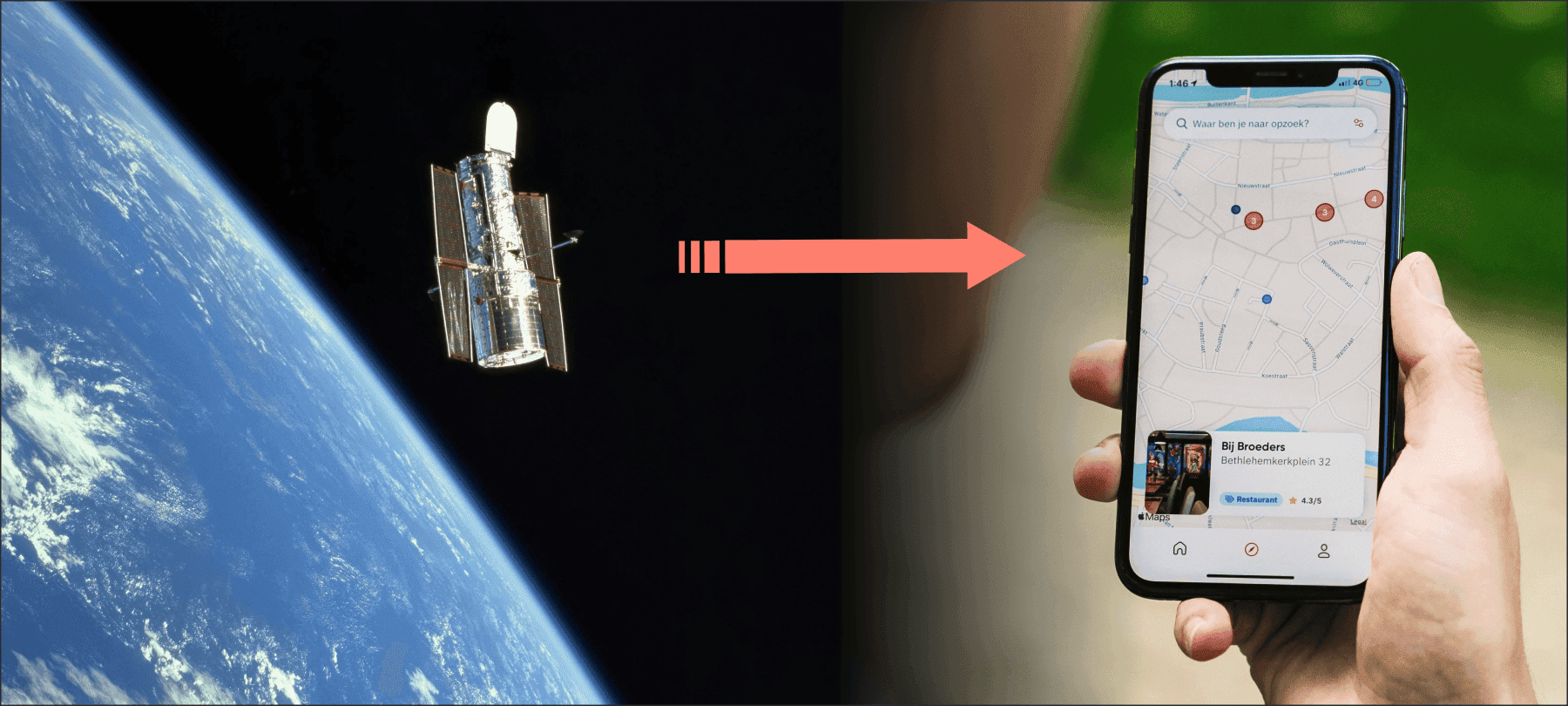
GPS feels almost magical, but the idea behind it is surprisingly straightforward.
Satellites orbiting Earth continuously broadcast two things: their exact position and the precise time the signal was sent. Your phone listens to at least four of these satellites and measures how long each signal takes to arrive.
Since radio waves travel at the speed of light, those tiny time differences reveal distance. Combine enough of them, and your phone can calculate its position on Earth.
The map on your screen is just the polished interface for a lot of very fast math.
5. The Limits We Don’t Notice Until They Matter
Because GPS works so smoothly, we rarely think about its weaknesses. But they’re built into the physics.
Satellite signals are faint by the time they reach Earth. They struggle to penetrate thick walls, underground spaces, and dense urban structures. If your location jumps inside a building or disappears in a tunnel, it’s not a bug. It’s a boundary.
GPS was never designed for indoor life.
Conclusion
GPS was born from military necessity, reshaped by tragedy, and transformed into one of the most important invisible systems in modern life.
It was the first technology to give humanity a shared, global answer to a simple question:
“Where are we right now?”
And in the places where that signal can’t reach, the next chapter of positioning technology is already being written.


Try Lite!