
[Location Technology, IRL] Why Even Google Maps Gets Lost Indoors: The Limits of GPS
Tech basics
In our last post, we explored the fascinating history of how GPS evolved from a classified military secret into an essential tool for everyday life. Today, let’s dive deeper into the most common limitations of GPS that we encounter in our daily routines.
Have you ever noticed how your map app guides you perfectly to your destination, only to become completely confused the moment you step into a large shopping mall or an underground parking lot? There are specific technical reasons for this phenomenon, and new trends are emerging to overcome these hurdles.
Innovation from the Sky, Blocked by Walls
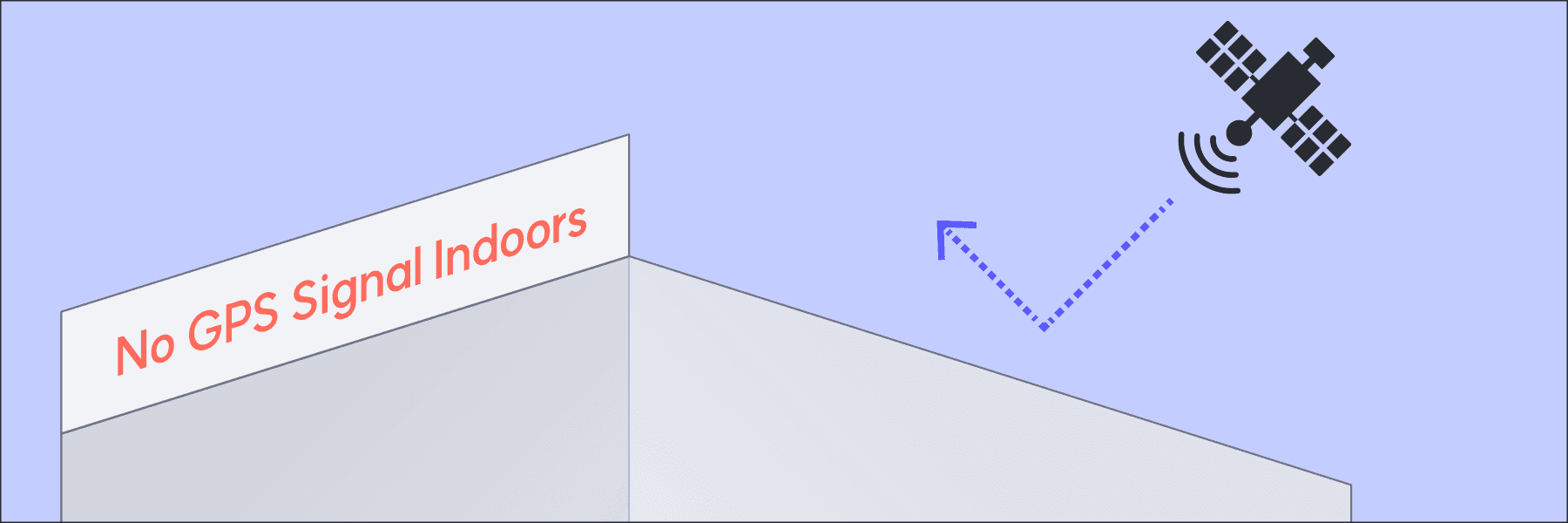
GPS (Global Positioning System) relies on signals sent from satellites orbiting the Earth. Because these signals travel such immense distances, they are extremely weak by the time they reach the ground.
The Concrete Barrier: GPS signals cannot penetrate thick concrete walls or heavy metal structures.
Disconnected Underground Spaces: In places like tunnels or basement levels where the sky is obstructed, receiving satellite signals is physically impossible.
Urban Canyons: In dense cities with towering skyscrapers, signals often bounce off buildings or become refracted, causing accuracy to drop sharply.
When the blue dot on your map jumps around or stays frozen while you are indoors, it isn't necessarily an app error. It is simply a result of the structural limitations of GPS technology.
The "Shadow Zone" Dilemma for Businesses
Areas where GPS cannot reach are known as "Shadow Zones." While this might just be a minor inconvenience when you're looking for a store, these blind spots cause massive inefficiencies in industrial settings.
Asset Management Gaps:
Key assets in semiconductor factories, logistics centers, and hospitals are mostly located indoors. Manually tracking thousands of parts or expensive medical equipment because GPS doesn't work leads to significant losses in time and money.Safety Blind Spots:
Real-time location tracking is vital for worker safety at complex construction sites or underground facilities. Without a reliable signal, response times can slow down during emergencies.Invisible Bottlenecks:
It is difficult to analyze why specific areas experience frequent delays if you can't track movement indoors. Without data-driven insights into where and why "clogs" happen, companies are forced to rely on guesswork, leading to recurring inefficiencies.
Indoor Positioning: Beyond GPS
To light up these "foggy" indoor spaces, various indoor positioning technologies have been developed. The key is to use a building's internal infrastructure instead of satellites.
Wi-Fi: This method analyzes the signal strength of nearby wireless routers. It is cost-effective because it uses existing infrastructure, but accuracy is generally lower (5 to 15 meters) due to signal interference.
BLE (Bluetooth Low Energy) Beacons: These use small signal-emitting devices to pinpoint locations. While energy-efficient and highly compatible with smartphones, they require manual installation and ongoing battery maintenance.
UWB (Ultra-Wideband): A high-precision tech that measures the time it takes for radio signals to travel. It is incredibly accurate (down to the centimeter), but it is expensive to implement and requires specialized equipment.
PDR (Pedestrian Dead Reckoning): This uses a smartphone's internal sensors, like accelerometers and gyroscopes, to calculate steps and direction. Since it doesn't need external signals, it is a great backup, but errors can accumulate over long distances.
The Final Piece of the Location Puzzle
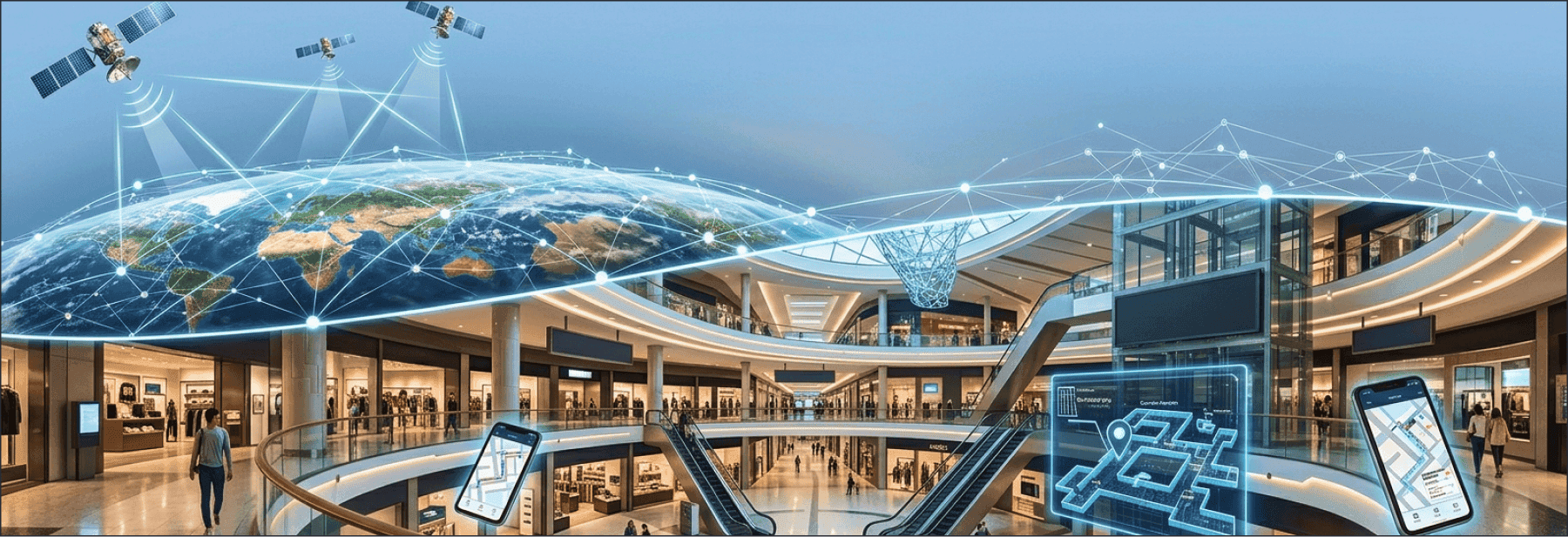
GPS is a revolutionary technology that answered the global question, "Where are we?" However, the final piece of the puzzle is perfecting that answer for the indoors.
At IPIN LABS, we are using AI-driven indoor positioning to turn these "Shadow Zones" into spaces of valuable data. Imagine a world where Google Maps guides you perfectly to a specific shelf inside a store and businesses manage every indoor asset at a glance.
In our next post, we will introduce the specific technologies that find your location indoors without a single satellite. Stay tuned!


Try Lite!