
SusHi Tech Tokyo 2026: What 300 Conversations Told Us About Japan
Story
Heading to Tokyo for SusHi Tech 2026
This past April, IPIN LABS joined SusHi Tech Tokyo 2026 at Tokyo Big Sight. Hosted by the Tokyo Metropolitan Government, it's Asia's largest innovation conference, and the scale shows it. Around 770 startups exhibited and roughly 60,000 people walked the floor over three days, all centered on one ambitious theme: building sustainable cities through technology.
The first two days, April 27 and 28, were business days for investors, corporate teams, and government delegations. The final day, April 29, opened to the general public.
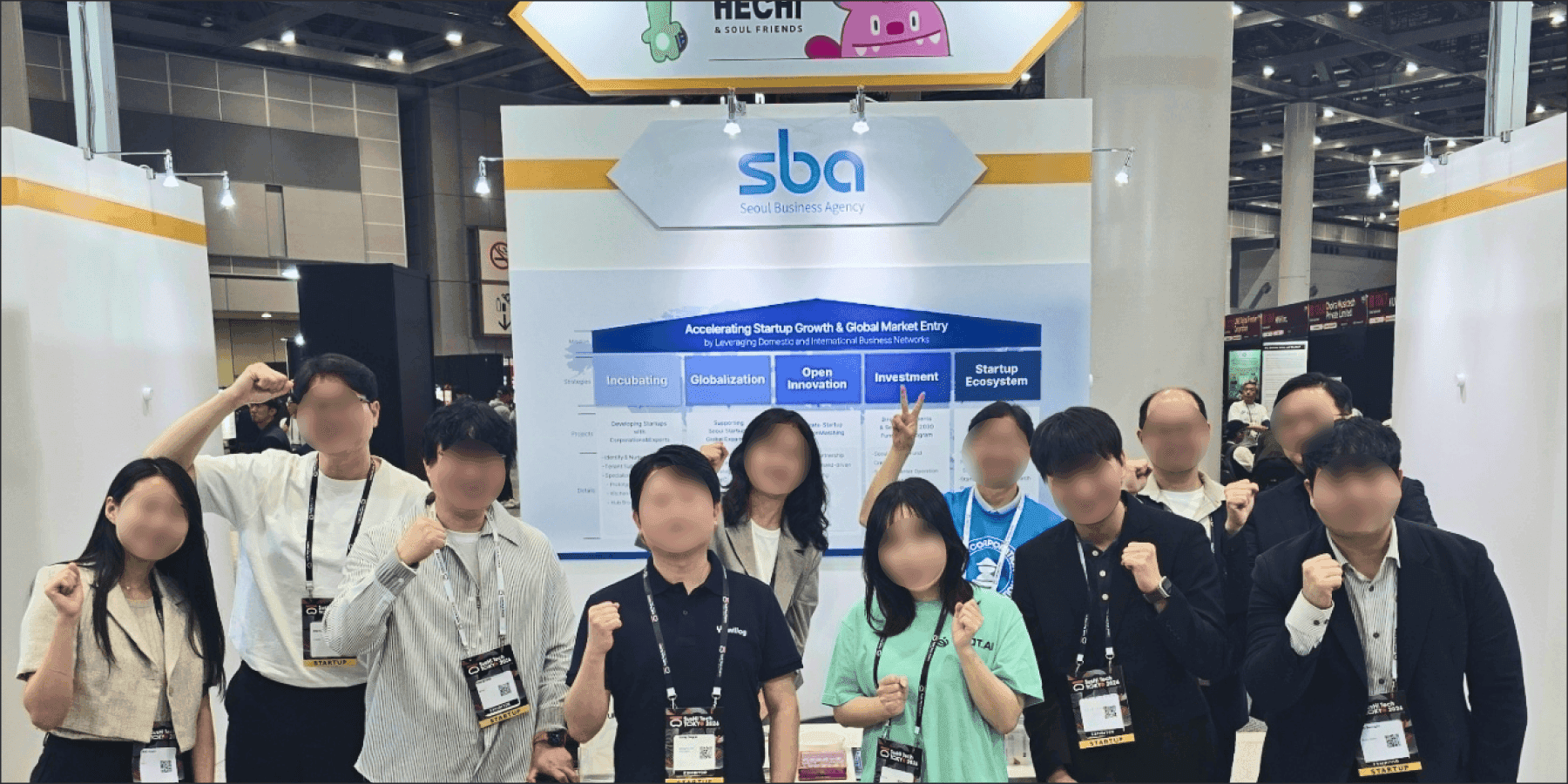
We were there thanks to the Seoul Business Agency (SBA) and Seoul Startup Hub Gongdeok. The SBA pavilion gave us more space than a typical startup booth, which meant we could walk visitors through our solution in real depth instead of rushing the pitch. And once we were on the floor, everything ran smoothly thanks to the steady, on-the-ground support of our Japanese partner, AlphaDrive.
What Actually Stopped People at Our Booth
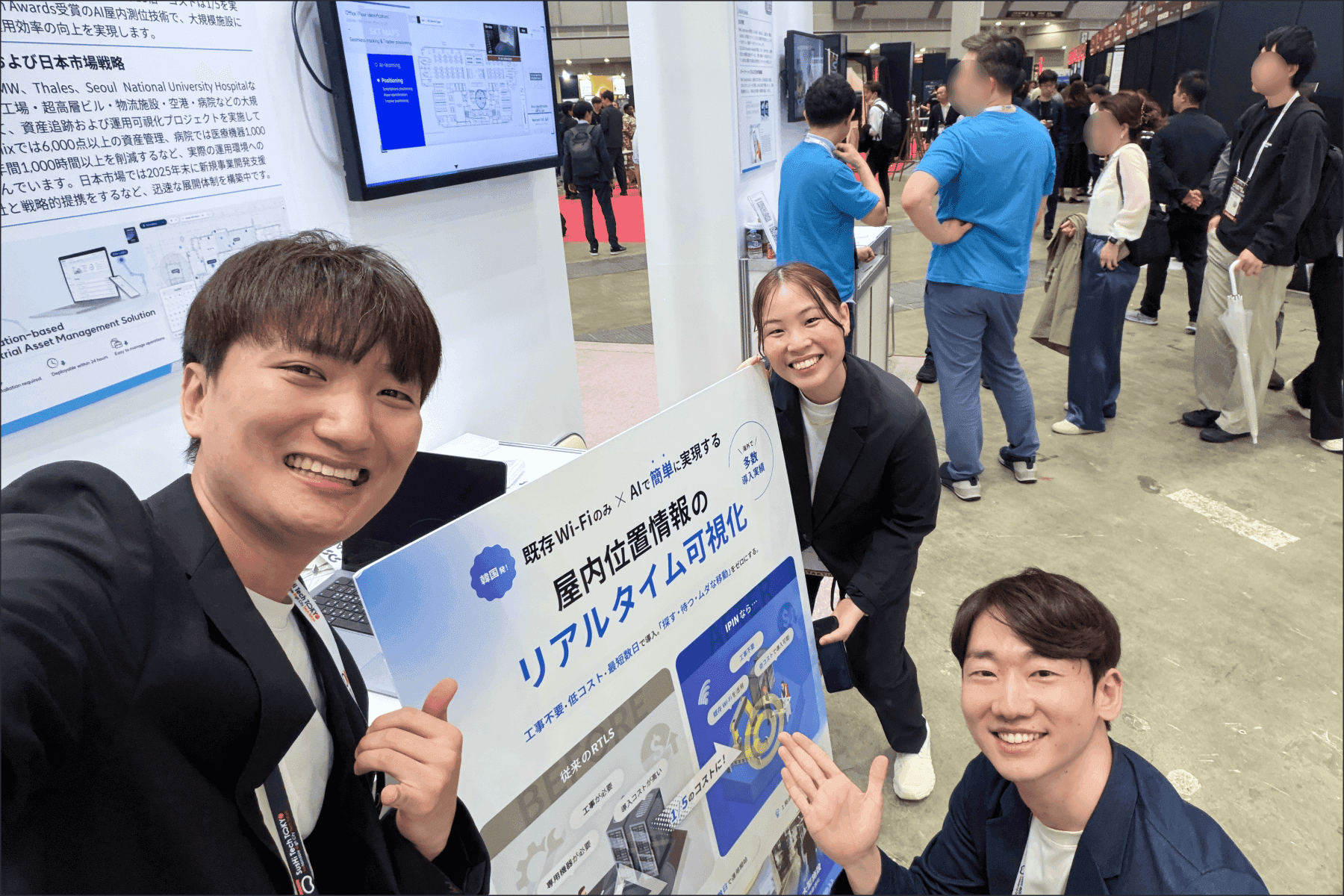
Our setup was simple. A 32-inch monitor looped footage from a real customer deployment. A laptop sat ready with the deck and a live demo (which we ended up using less than expected). And along one side of the booth stood an A0-sized panel that AlphaDrive had put together for us.
I'll be honest. I've worked plenty of booths and never thought a panel really mattered.
This time was different.
The panel turned out to be the most effective thing we brought. One clear line, "finding accurate locations where GPS doesn't reach," stopped people right in front of us. Visitors who would have walked straight past paused, read the headline, and stepped in to ask questions.
A small lesson, but a real one. What gets people to stop at a booth isn't a clever line you deliver in person. It's one image they can read from across the aisle.
300 Conversations, One Recurring Pattern
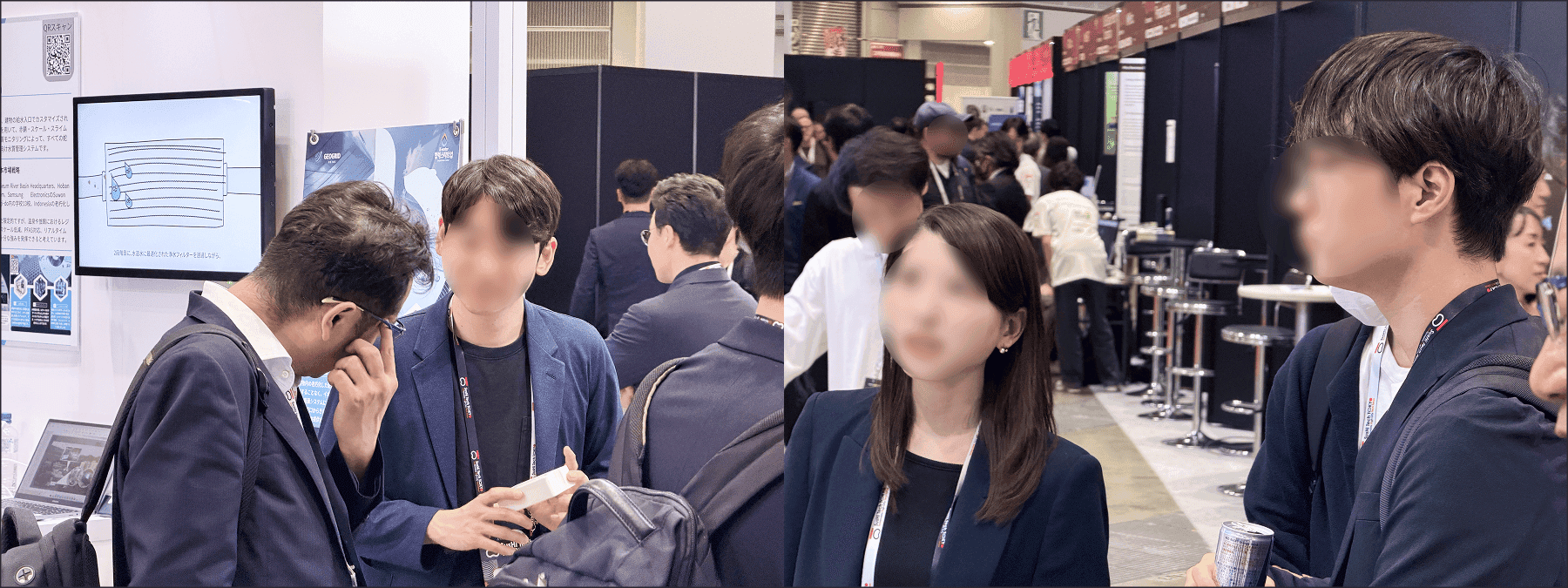
Over three days, more than 300 people stopped by our booth. They came from manufacturing, healthcare, real estate, logistics, and public agencies. Different industries, different priorities, different ways of describing the same thing.
After enough conversations, the pattern was hard to miss. Japan is wrestling with the same indoor location data gap we see in every other market we've worked in. The vocabulary changed depending on who we were talking to. Asset tracking. Worker safety. Operational visibility. Underneath, the same problem.
The questions we heard most often:
Can this really run on Wi-Fi alone, without adding new hardware?
Will it work with the infrastructure we already have in place?
Would it hold up in a facility like ours?
By day two, a bigger question had answered itself. There is real, meaningful work for IPIN LABS to do in Japan.
A real thank you to the AlphaDrive team. They opened doors I could not have opened on my own. The visitors I met through their introductions turned three busy days into something far more valuable than a typical trade show.
Public Day, and What Stayed With Us
The mood on April 29, the public day, was completely different. Families wandered through. Curious students stopped to ask questions. What stuck with me most were the kids holding their parents' hands, looking up at our screen and asking what the moving dots meant.
Watching that, I kept thinking about how important it is for kids to bump into real technology early, casually, with no pressure. Cities that put real technology in front of children early are quietly building their own future.
Tokyo gave us three days that went well beyond sales conversations. We came home with a clearer picture of the Japanese market, a deeper appreciation for what a strong local partner makes possible, and a fresh respect for the power of one well-designed image.
Wherever our next booth ends up, I'm already curious about the conversations we'll start there.


Try Lite!