
POC diary: European International Airport (Part 1)
Story
What is a POC diary? A POC, or proof of concept, is a small-scale trial that tests a solution in a real environment before a full rollout. At IPIN LABS, we run POCs with customers across many industries, and every site brings a different environment and goal. So in this series, I'll share our POC stories from my seat as project lead. The first diary comes from early December 2025, at a major international airport in Europe.
The problem the airport wanted to solve
Our destination was an international airport in Europe preparing for the winter season. Skis and snowboards don't fit on regular conveyor belts, and this kind of oversized baggage surges in winter. To move it, the airport runs about 60 special carts, each costing around €1,000 (about $1,100).
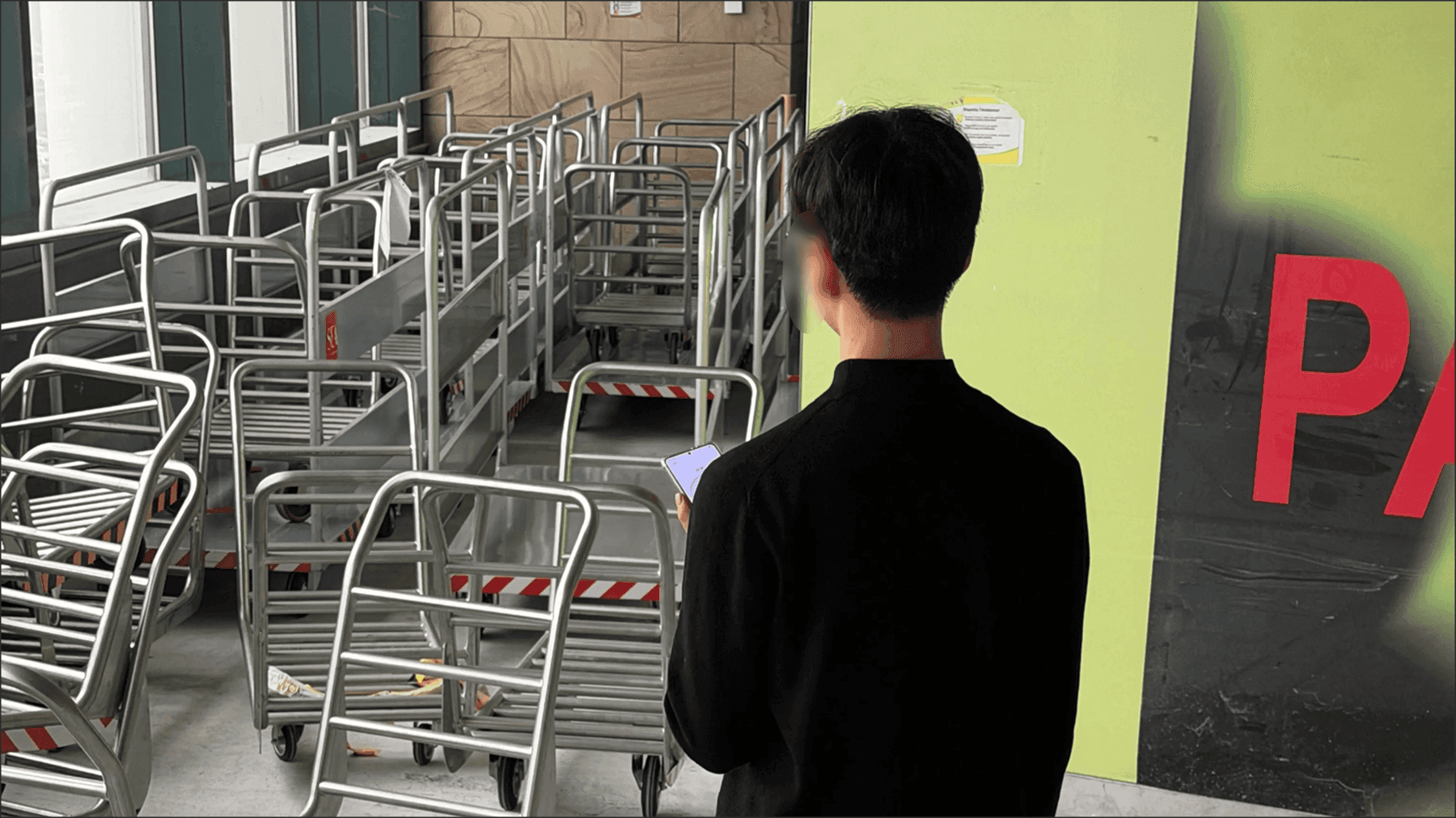
The trouble is that the carts never stay put. They scatter across a huge terminal: the second-floor check-in counters, the basement baggage handling area, the cart storage room. When staff need a cart, they often can't find one. A late cart delays oversized baggage handling, and that delay ripples into passenger transfers and gate schedules.
The airport's question to us was simple: "Can you track where the carts are and visualize how they move?" The operational requirement was a location update every 40 minutes, and the validation period had been set at one month.
A tough environment, and the Zero Infrastructure approach
International airports take security very seriously. Most indoor positioning solutions, like Bluetooth (BLE) beacons, ultra-wideband (UWB) anchors, or RFID readers, require mounting new hardware on walls and ceilings. That means heavy security reviews and construction work. Fingerprinting, another common method, requires collecting signal data point by point across the whole space, which isn't realistic in an airport where people never stop moving.
BPIN, the indoor positioning platform from IPIN LABS, takes a different path. It uses the Wi-Fi access points the airport already has, building a positioning model from existing Wi-Fi signals and smartphone IMU data (an IMU, or inertial measurement unit, is the motion sensor built into every smartphone). Each cart gets a small tracker that reads those signals, but nothing new is installed on the building itself. For the airport, that means no new infrastructure investment and no operational downtime. We call this approach Zero Infrastructure. Our goal for the trip was clear: build and verify the system within a week, before the one-month POC began.
Two days of site survey and data collection
At 9 a.m. the day after landing, our machine learning engineer and I, a team of two, arrived at the terminal. We started with a site survey, walking the routes that mattered: the second-floor check-in counters, the oversized baggage elevator, the cart storage room, and the basement baggage handling area. A short kickoff meeting with the airport team followed, where we shared not only our plan but also its limits.
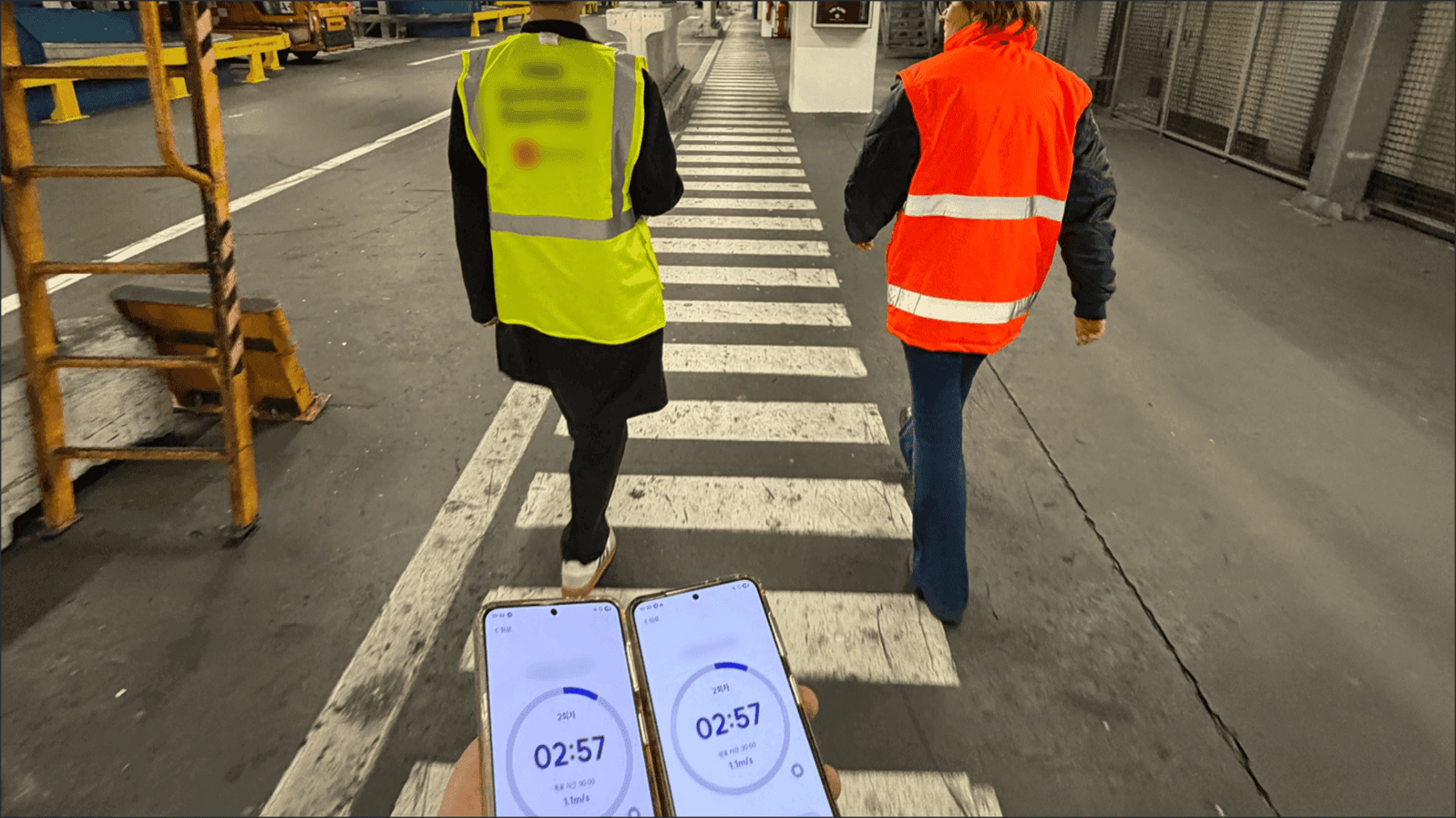
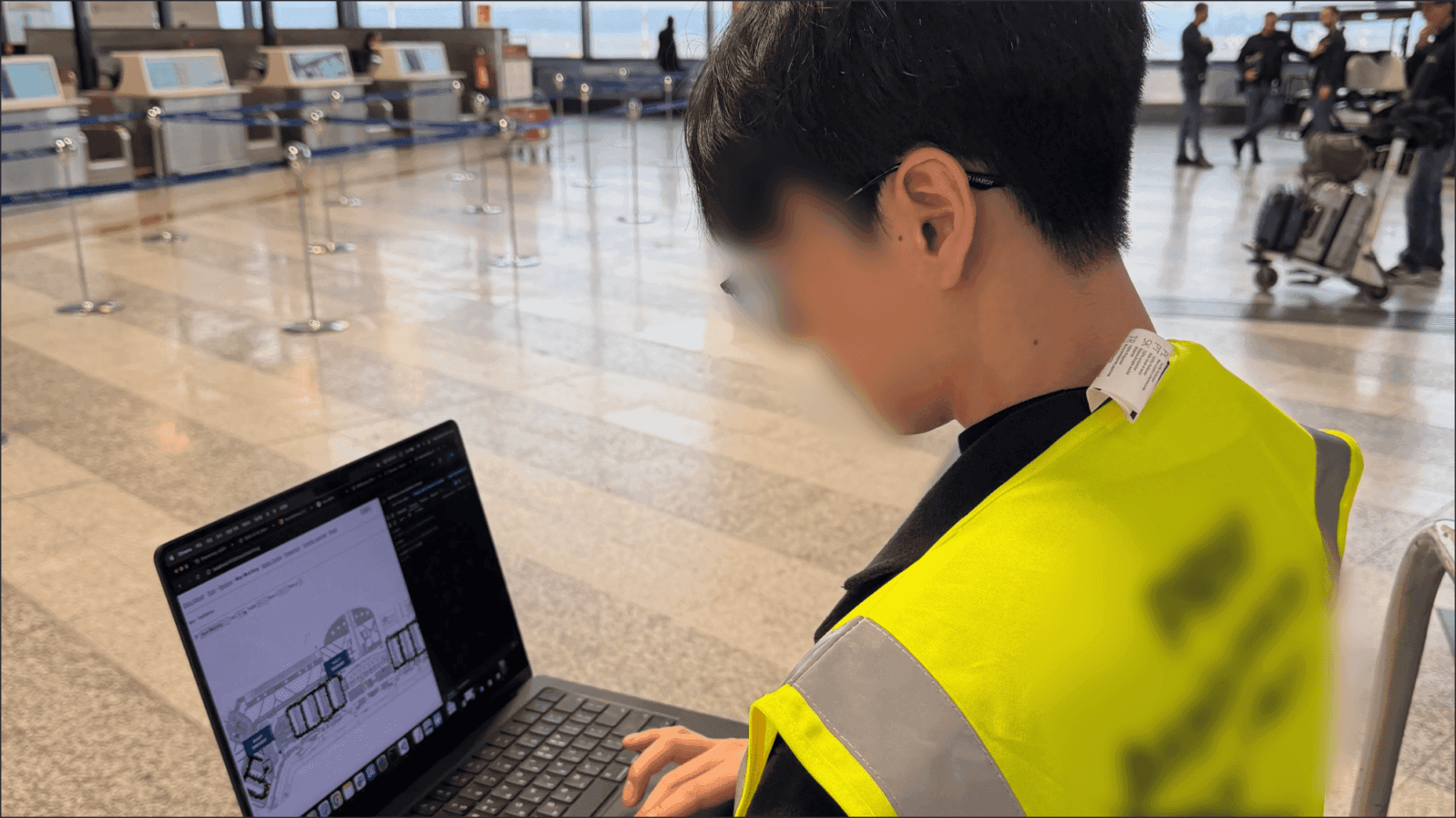
For data collection, we skipped the usual stop-and-measure routine. Instead, we used a dynamic method built on the smartphone IMU's accelerometer and gyroscope. You simply walk the space at a normal pace, and the sensors learn the signal environment as you go. Mapping the second-floor work area took about three hours. The next day, we repeated the process in the basement baggage center.
Cart placement, and one open question
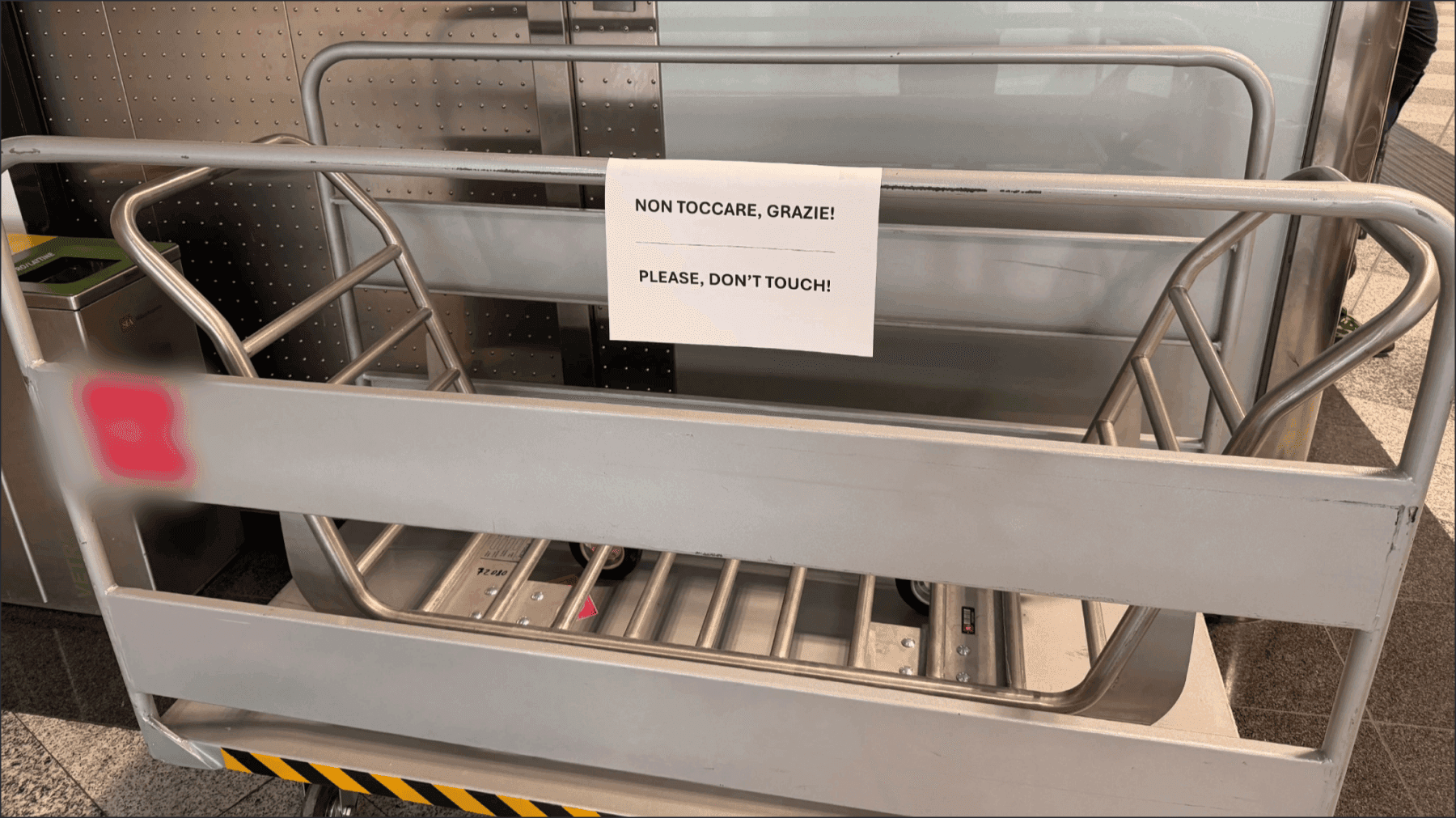
Once data collection and model training were done, we placed the carts at key spots for testing: 10 gondola carts (flat carts for oversized baggage) and 10 ski carts, each fitted with a tracker. We also put up "Do Not Touch" signs so airport staff wouldn't be confused.
That evening, back at the hotel with the dashboard still open, an odd coordinate caught my eye. A cart that should have been sitting at its assigned spot was showing up hundreds of meters away, in an area we had never visited. Was it a system error? Or had someone moved the cart despite the signs? The answer comes in Part 2.
Travel Note: At 11 p.m. on our first night, the Uber fare from the airport to our hotel, a 10-minute drive, came to €114 (about $120). It was a fixed night rate; after 6 p.m., the price is nearly locked in. A taxi ride that cost almost as much as a flight: that was our welcome to the trip.


Try Lite!