
VivaTech 2026: How We Map Indoors Without Reference Points
Story

VivaTech 2026 Europe's largest tech show marked its 10th anniversary this year, running June 17–20 at Porte de Versailles in Paris. We spent the week there, meeting people at our booth and showing them BPIN. This post is about the question we heard most often while we were there.
A Week in Paris
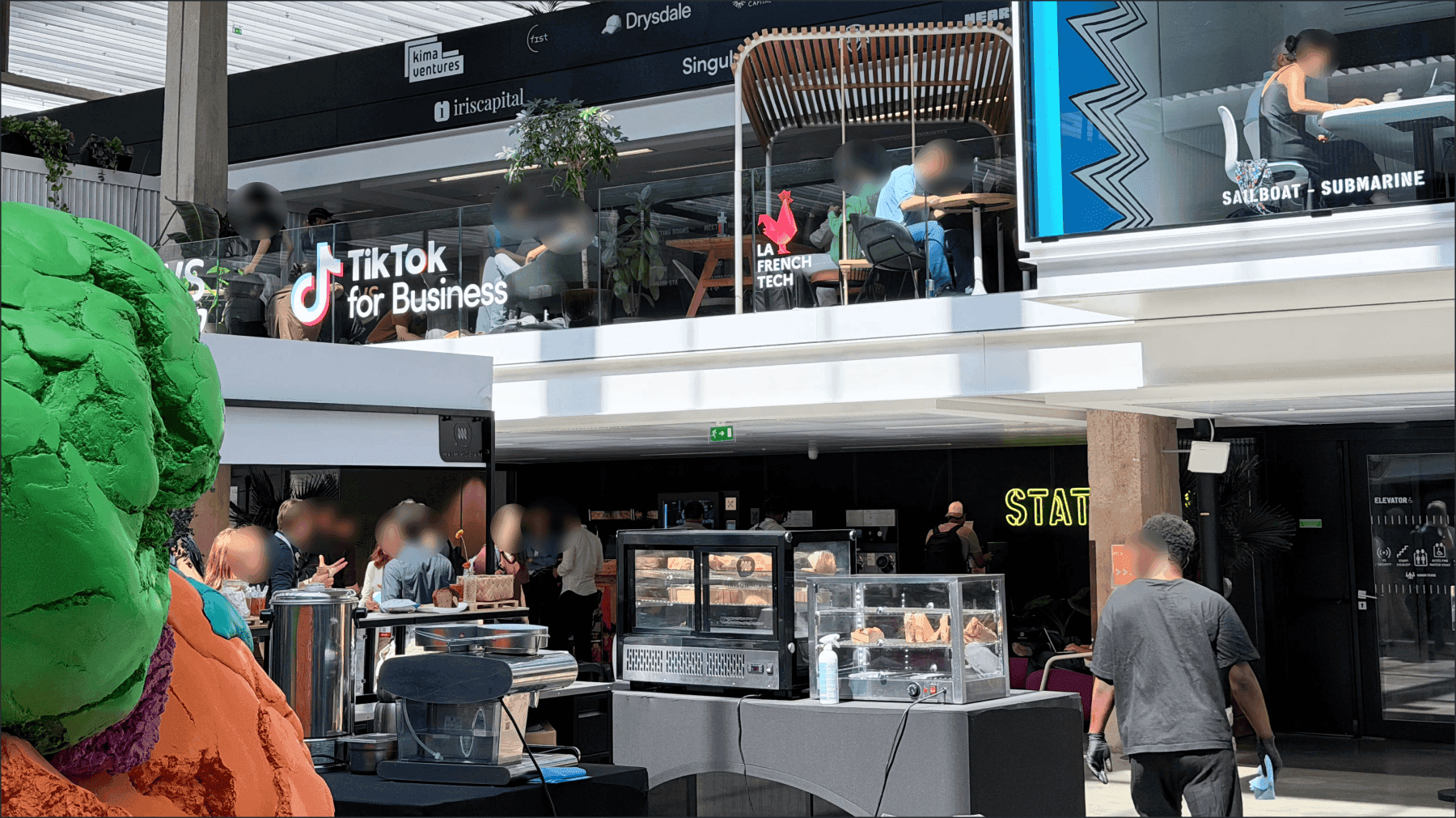
VivaTech started in 2016 and turned 10 this year. Over four days, visitors from more than 170 countries come to see almost every kind of technology, from AI to health, energy, and mobility.
We were there as a startup from Korea, with a booth at the show. The day before it opened, we joined a guided tour of Station F, a startup campus in Paris, and stopped by a networking event called "Seoul Night in Paris." What stuck with me was the size of Station F. It is billed as the world's largest startup campus, and a single building, a former rail freight depot, was filled end to end with startups.
The Question We Heard Most Often
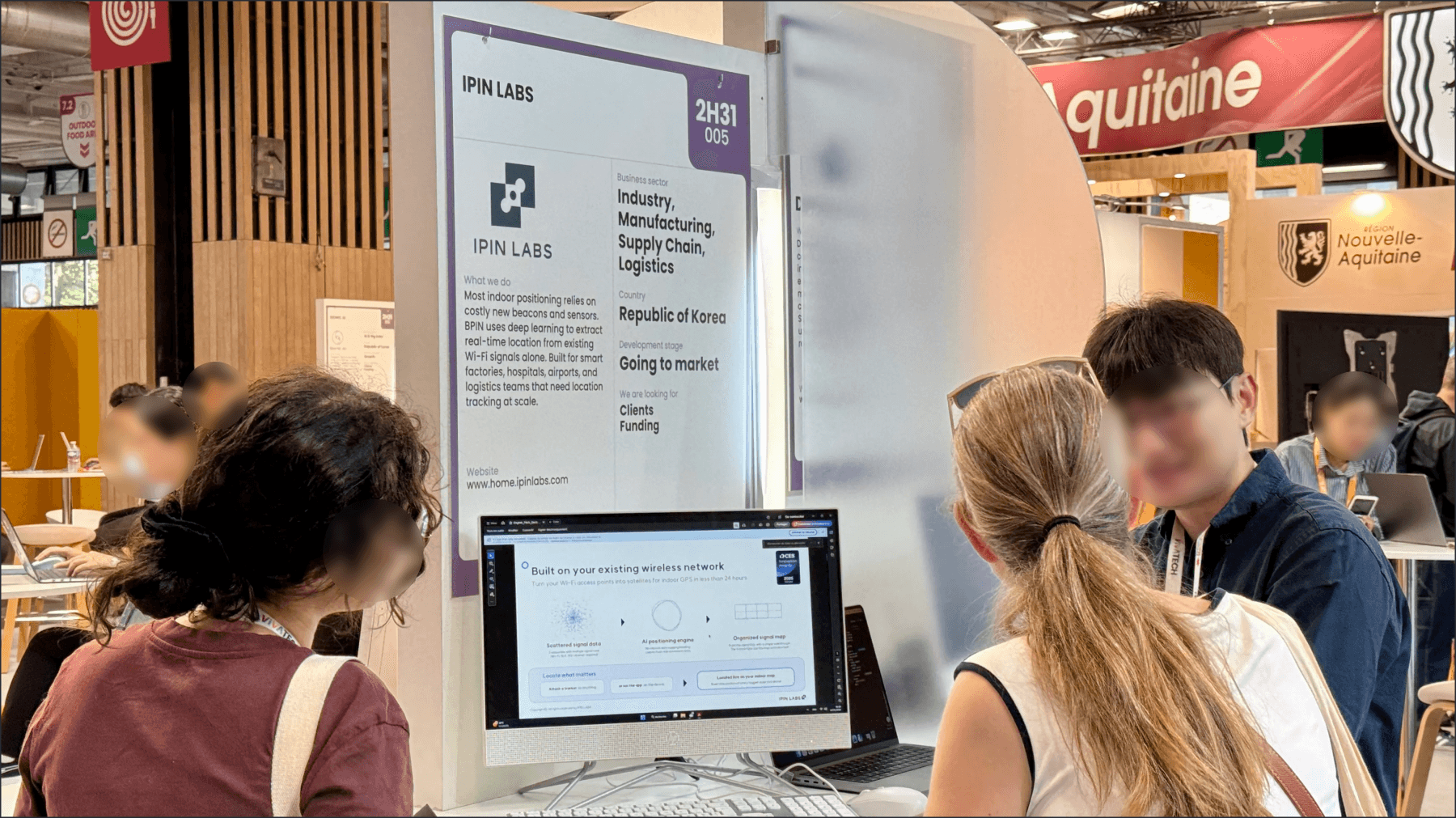
The product we showed is BPIN, an AI-based indoor positioning platform. It combines the Wi-Fi signals already in a space, the motion data from a smartphone's IMU (inertial measurement unit), and an AI positioning model to track where people and equipment are indoors. It runs on the Wi-Fi a building already has, with no new hardware to install. We call this a "Zero Infrastructure" approach.
The question we heard most often went a step deeper. "If you don't even know where the access points are, how can signal alone build a map?" It was a sharp question. Most fingerprinting methods depend on a site survey, where you measure the signal at known reference points whose locations you already have.
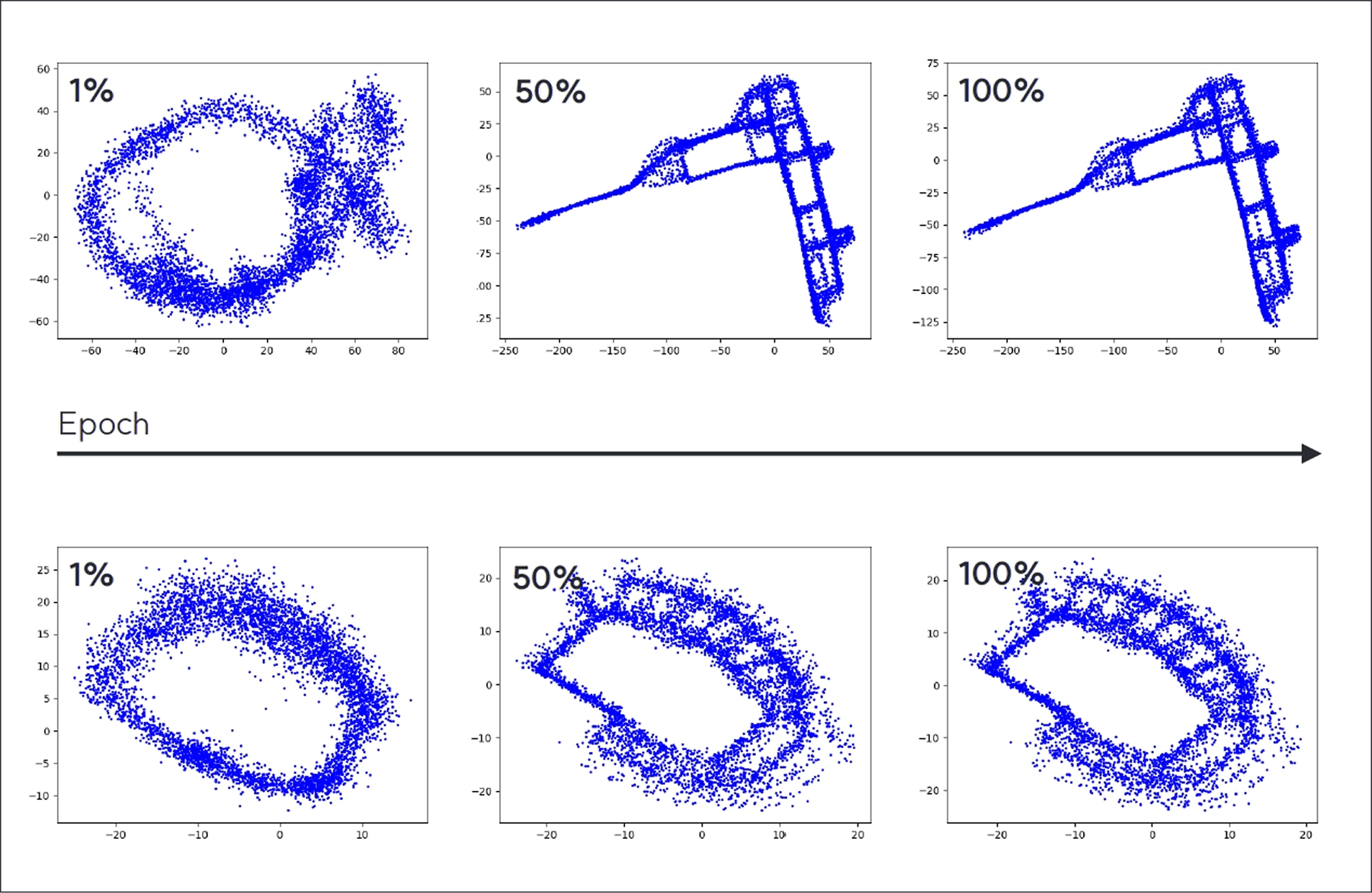
Our answer was that we don't need those locations. As someone walks through a space once, we collect two things at the same time: the Wi-Fi signal strength (known as RSSI) and the path the phone traces on its own. Each one gives a slightly different route. A model then trains to shrink the gap between the two routes, and a positioning model takes shape through statistics. No reference points, and no survey up front. Because we skip both, a new site can go live in about a day, not the weeks a beacon-based system often needs.
Airports, Theme Parks, and Energy Sites
The conversation I remember most was with someone from a large theme park operator in Europe. They were looking for indoor positioning to improve the visitor experience, and they already ran several robots across their themed areas. What they liked most was using the Wi-Fi that was already in place, instead of adding more equipment.
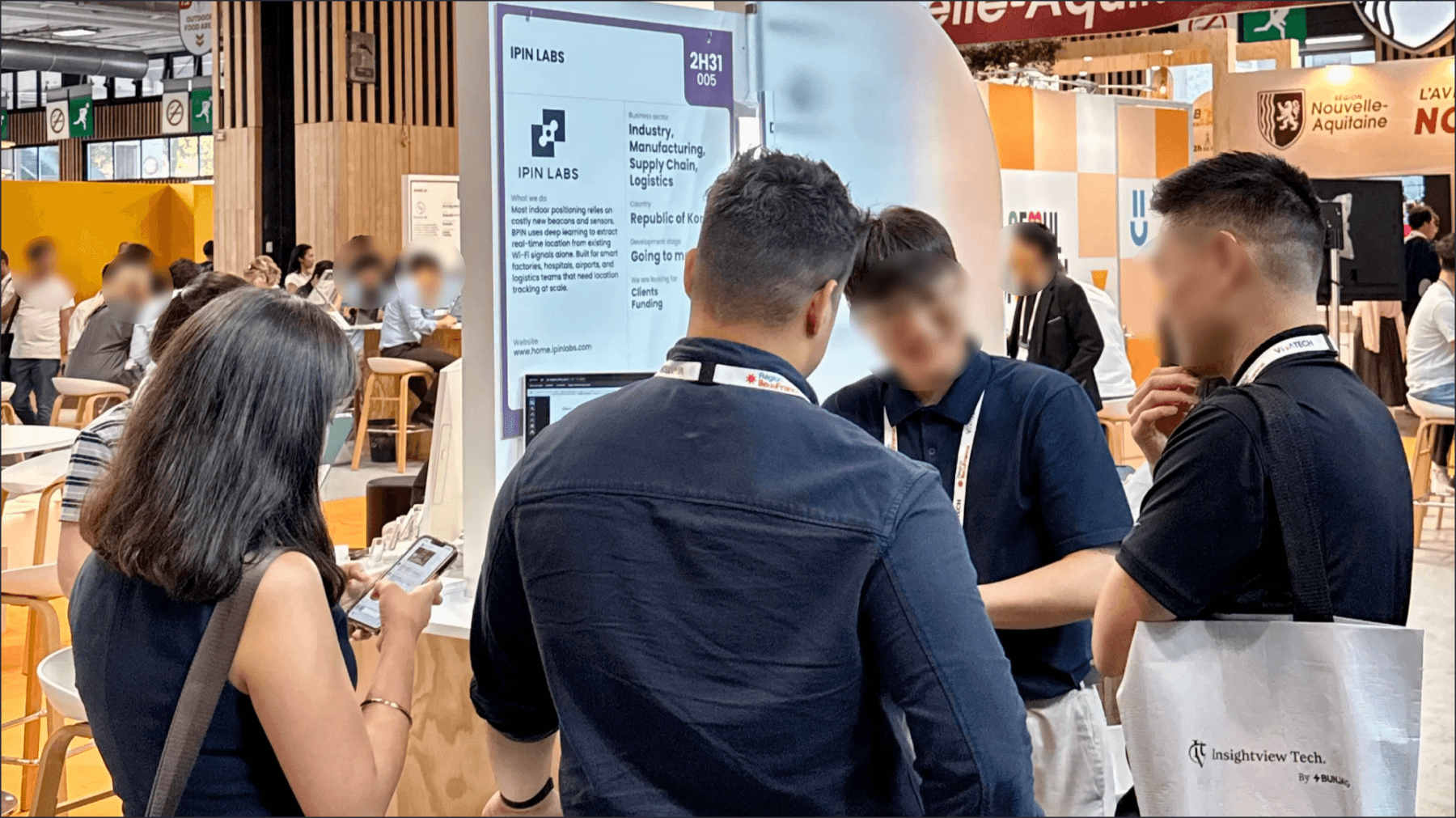
"The Wi-Fi is already everywhere. Being able to use it as is, that's the part that appeals to me most."
We had that same kind of talk many times a day. A European airline shared a positioning project underway at an airport. People from energy and industrial companies looked at BPIN through the lens of site safety and asset tracking. The industries were different, but the starting point was the same: large spaces that already have Wi-Fi and are too security-sensitive to take on new construction.
Here are the questions that came up again and again, along with the answers we gave:
Will the existing Wi-Fi work for positioning? In spaces with a normal level of Wi-Fi coverage, like offices or airports, yes, with no new installation.
Do we have to survey again if the signal environment changes? No. We aren't tied to a fixed map of reference points, so the model can retrain quickly when things change.
Does it work for robots and equipment, not just people? Yes, on the same positioning model. A person holding a phone and a robot or asset with a sensor are tracked the same way.
Do we need security sign-off or a separate server? Adding no new hardware keeps the security burden low, and it can run on your own servers (on-premise) if needed.
For an airport, a theme park, or an energy site, that means indoor positioning with no added infrastructure, no security approvals, and no downtime.
After Paris
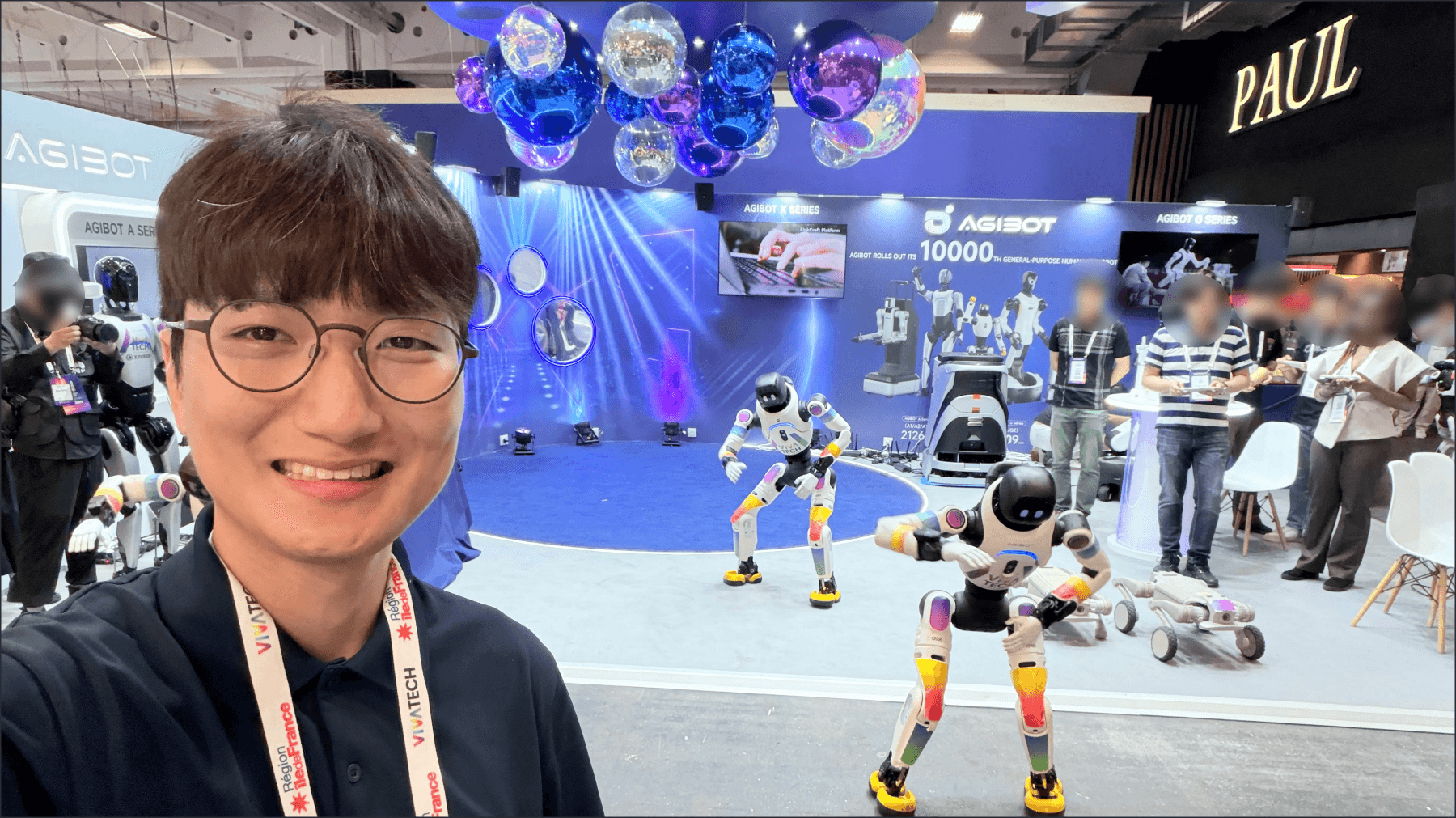
Once the show wrapped, we sent materials to the people we met and began preparing applications for the open innovation programs that caught our interest. We're following up on the conversations that started at the booth, one at a time.
If you're thinking about indoor positioning that runs on your existing Wi-Fi, with no new hardware, we're glad to talk anytime. Learn more about the solution


Try Lite!